See every command we run on your devices
Read only SSH, no agent, no configuration change. Here is the command list, the access it needs, and where each platform falls short.
What this does on your devices
One read only SSH session, with the credentials you provide. No configuration command is pushed.
The commands run are the platform's: what one command shows on IOS is read differently on VRP, and differently again on Junos or AOS-CX. Raw output is kept as it came, alongside the parsed fields.
No agent, no probe, no traffic mirror, no reboot, no change window. The data plane is untouched.
- Read only, your credentials
- Raw output kept, not only the parsed fields
- Nothing installed on the devices
- Works on old hardware
- Scheduled or on demand collection
Four ways to catch us out
The coverage matrix
The empty cells are published like the rest. Find your platform and look at what is marked no.
›The demonstration account
A one minute form, a read only account by email, on a fictional estate of fifty eight devices. Then you click everywhere.
›The how to guides
Every question handled screen by screen, with screenshots and video. Including the limits of each view.
›What the product cannot do
Between two collections, nothing is observed. NacTrack says what the network is, not whether a device is answering right now or how loaded it is. Real time monitoring stays necessary, and the trade off is written down here rather than left to be discovered.
›What you get, ticket by ticket
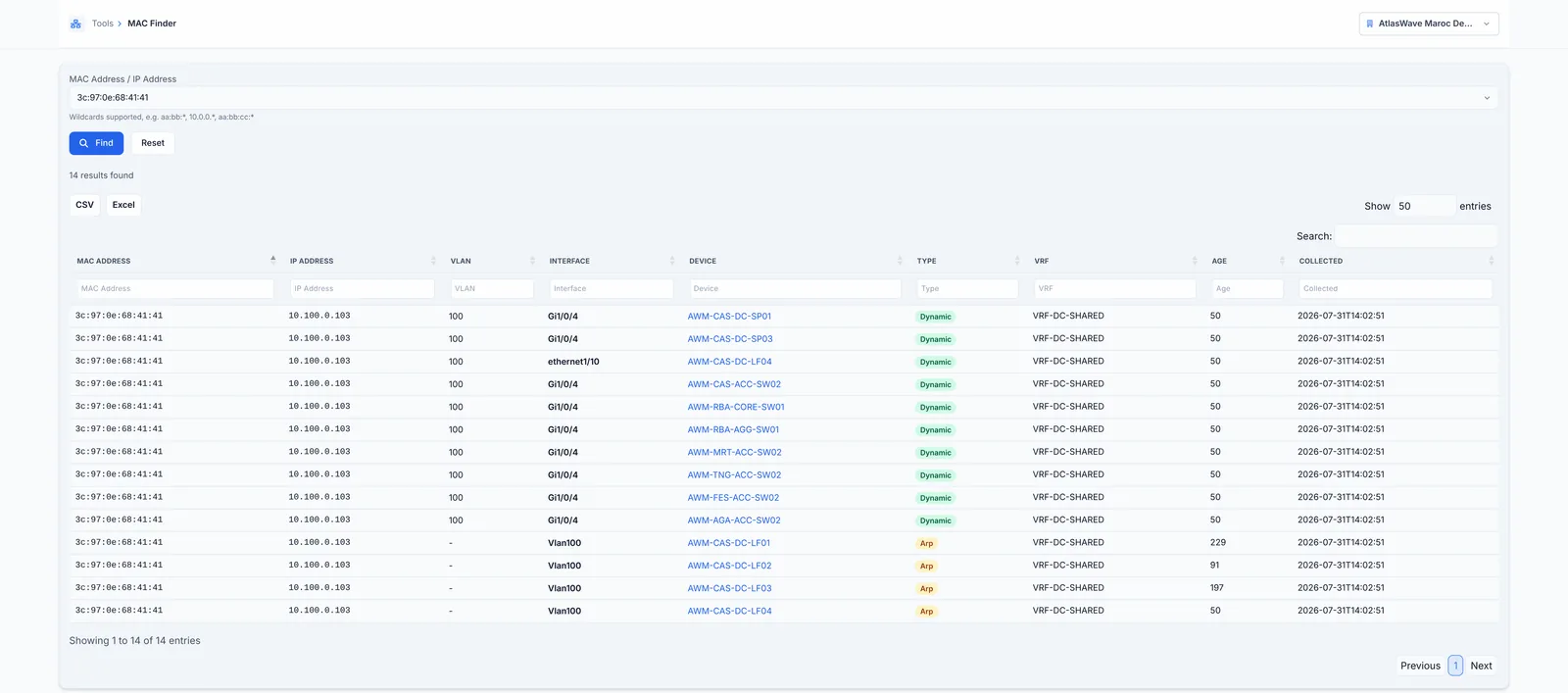
- The port behind a MAC address: one search, instead of a tour of sessions.
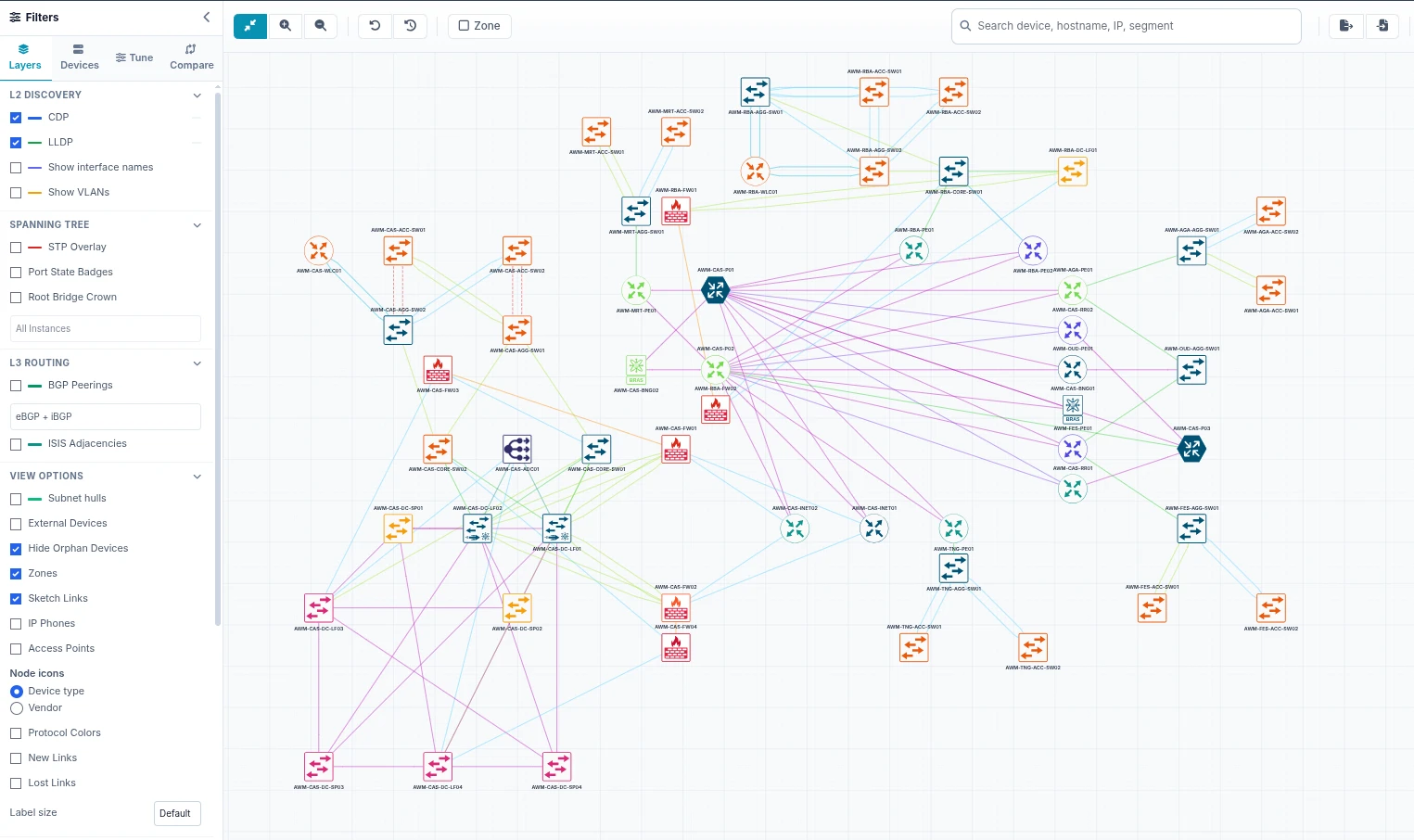
- The path of a VLAN between two sites: one query against the collected topology.
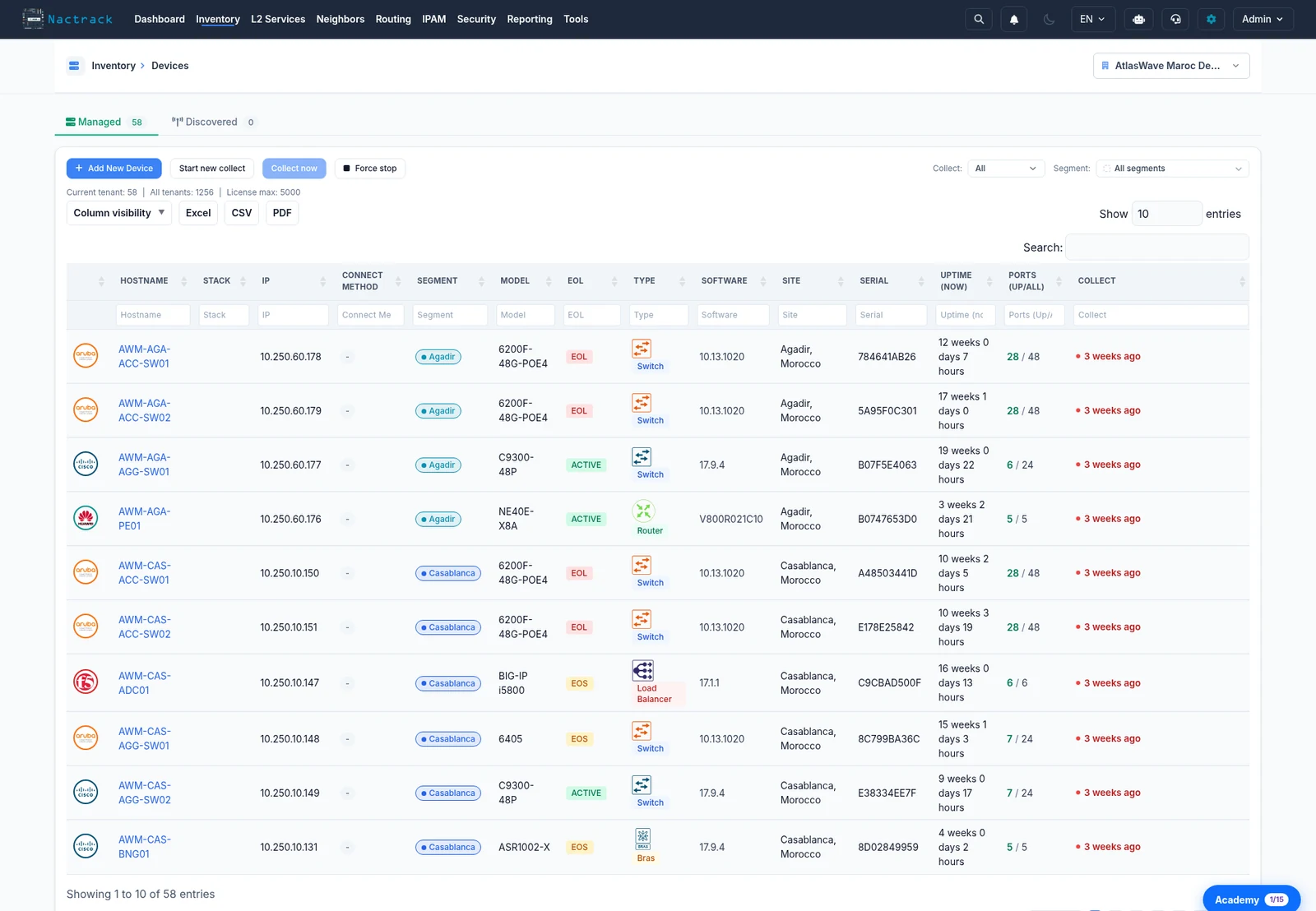
- The devices running a given software version: one sortable column.
- What changed in a configuration since the last collection: a dated diff.
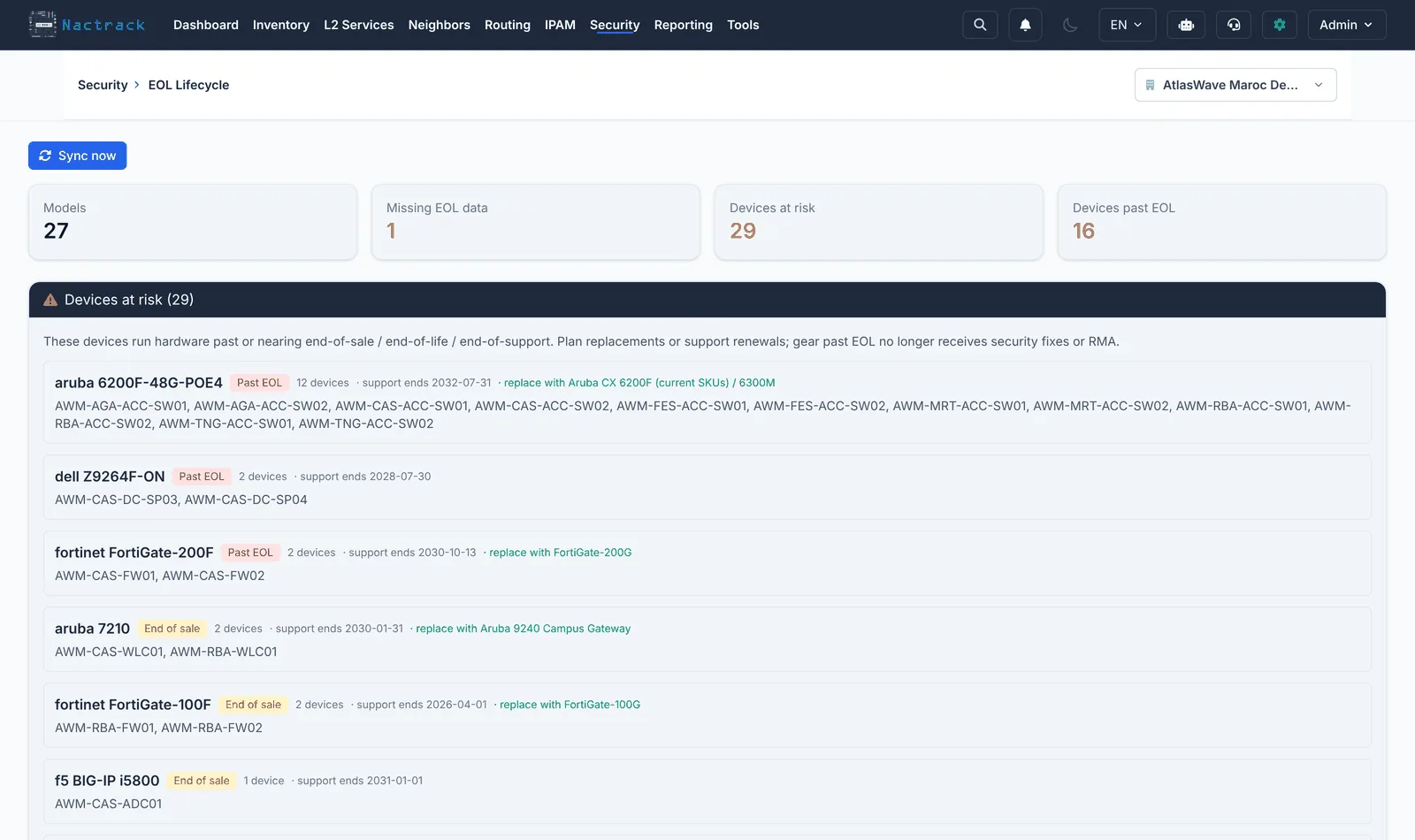
- A defensible replacement plan, rather than an estimate, when management asks for a budget.
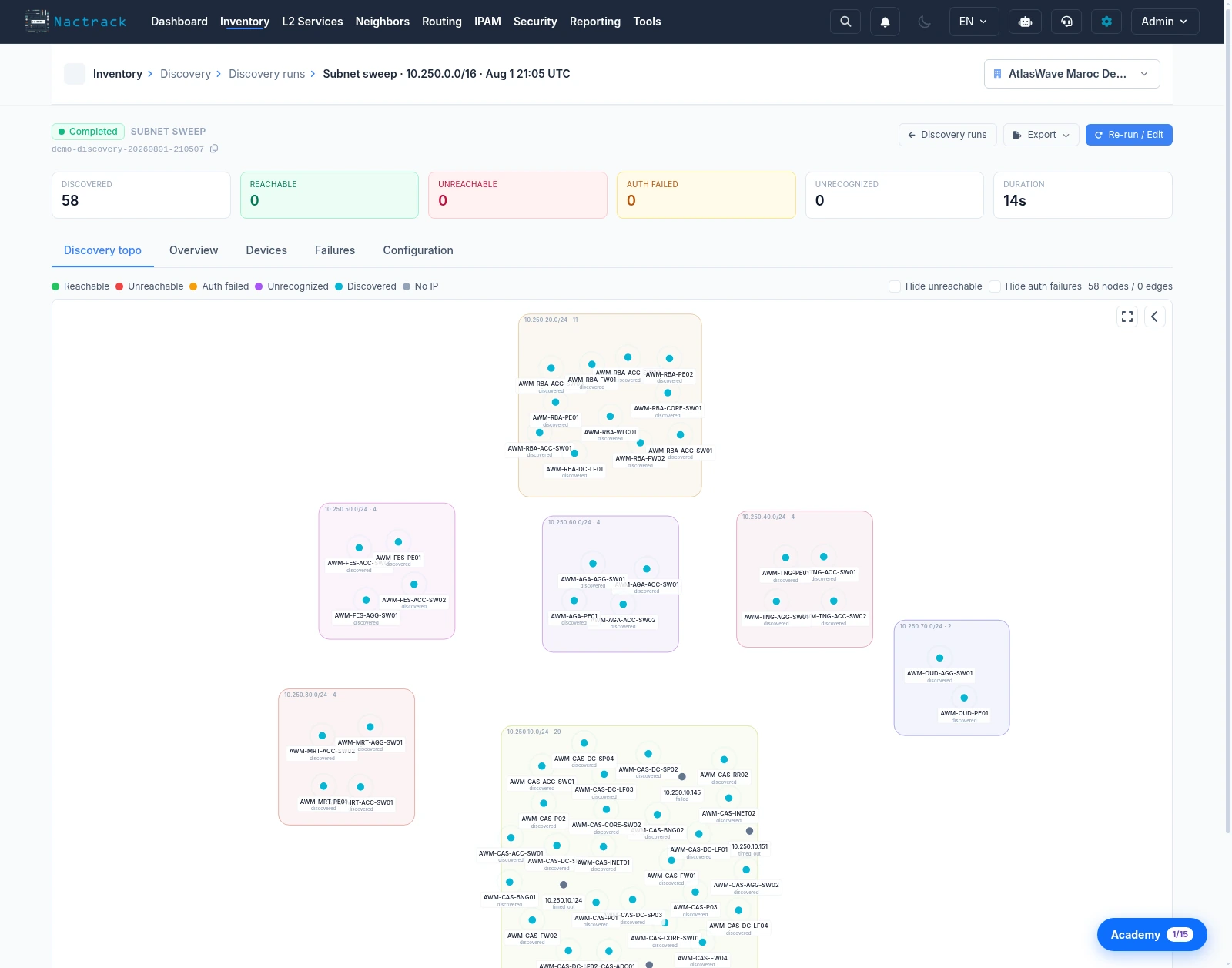
- The devices missing from every list, surfaced by the discovery crawl. Rarely the newest ones.
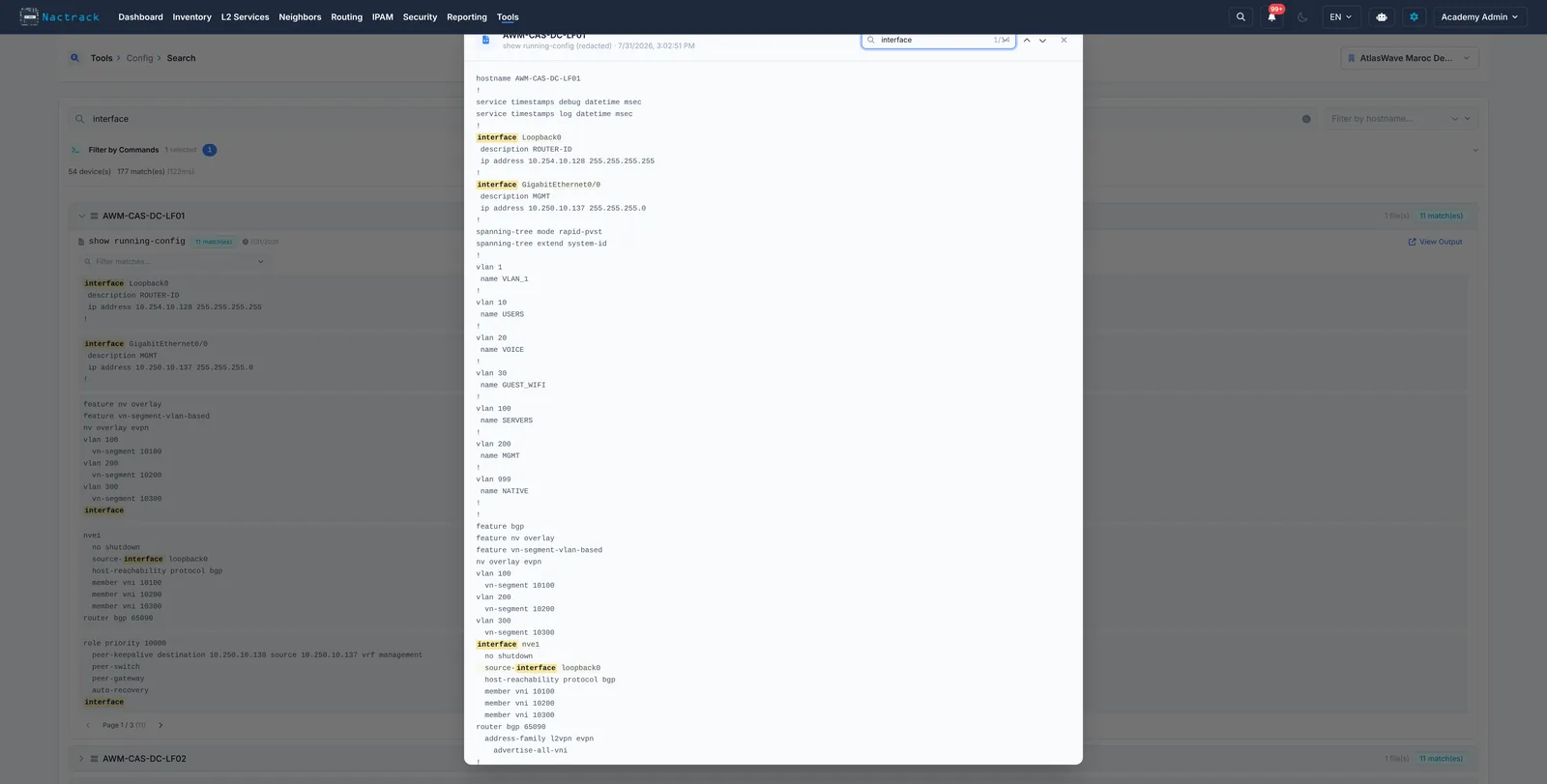
- The raw output of every command stays readable, so you can check what the parser made of it.
The same questions, screen by screen
All seven lines above, taken in the application on a fictional estate of fifty eight devices.

Take the demo for yourself
Read only, on a fictional estate. The account is requested through a form and arrives by email. Look for your platforms in the matrix, then go and see whether the product holds up to it.